Tirana, Albania: The Honest Brits Guide
by The Floating Nomads
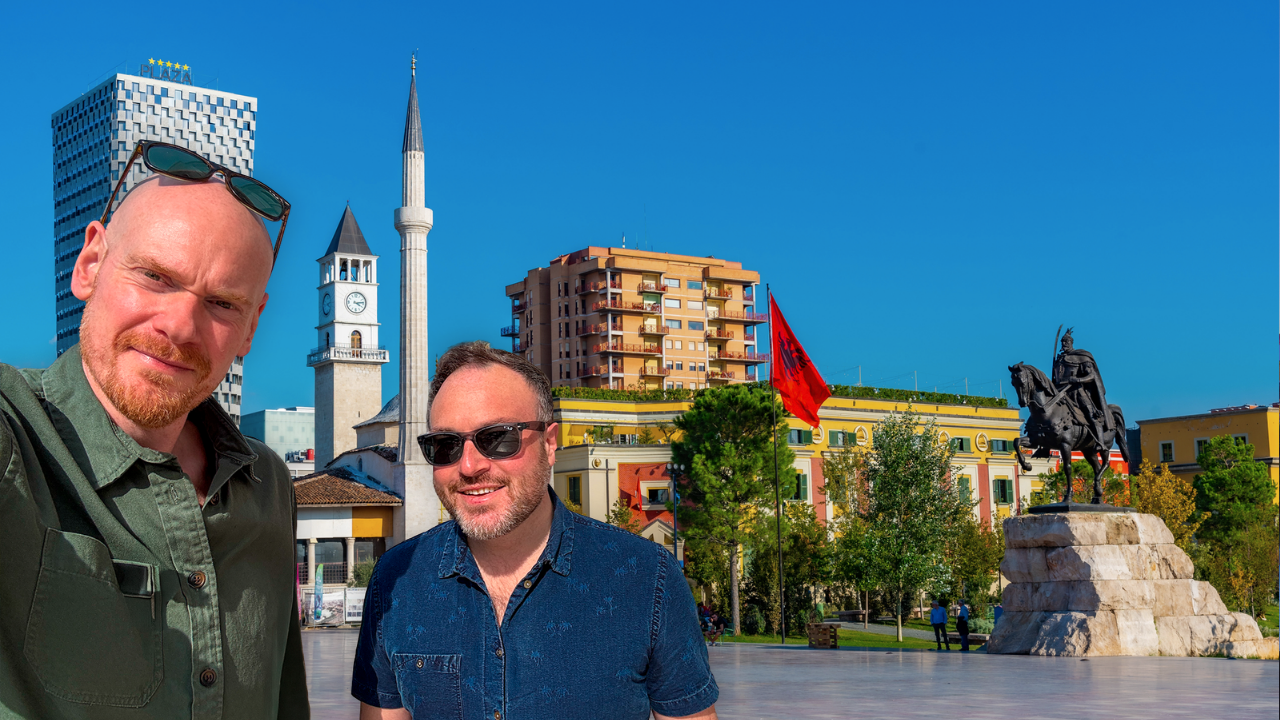
Until 1991, this was the most isolated capital in Europe. Today the dictator's pyramid is a centre for IT, the nuclear bunker is a museum, and the street outside the Russian embassy is called Free Ukraine.
Tirana is the capital of Albania. It is not on most British travellers' shortlist, which is exactly why it should be. If you are planning a trip to Tirana and want to know what it is actually like to visit: what to do, what to skip, how cheap it really is, whether the bunker is worth your time, whether the cable car is worth the price, and what the food and bar culture are actually like - this is the guide we wish we had before we went.
We spent a week in Tirana, walked the city on foot, climbed the dictator's pyramid, went five storeys underground into Hoxha's nuclear bunker, took the longest cable car in the Balkans up Mount Dajti, and ate our way through more bars in Blloku than was strictly necessary.
What to Expect
Tirana is unlike any other capital in Europe. Until 1991 it was sealed off from the outside world. The country built more than 170,000 military bunkers, roughly six for every square kilometre, and forbade foreign travel, religion and most consumer goods. When communism fell, the city set about deliberately undoing the visual language of the regime: huge wide boulevards were carved through, parks were planted everywhere, and the dictator's monuments were either redesigned or repurposed.
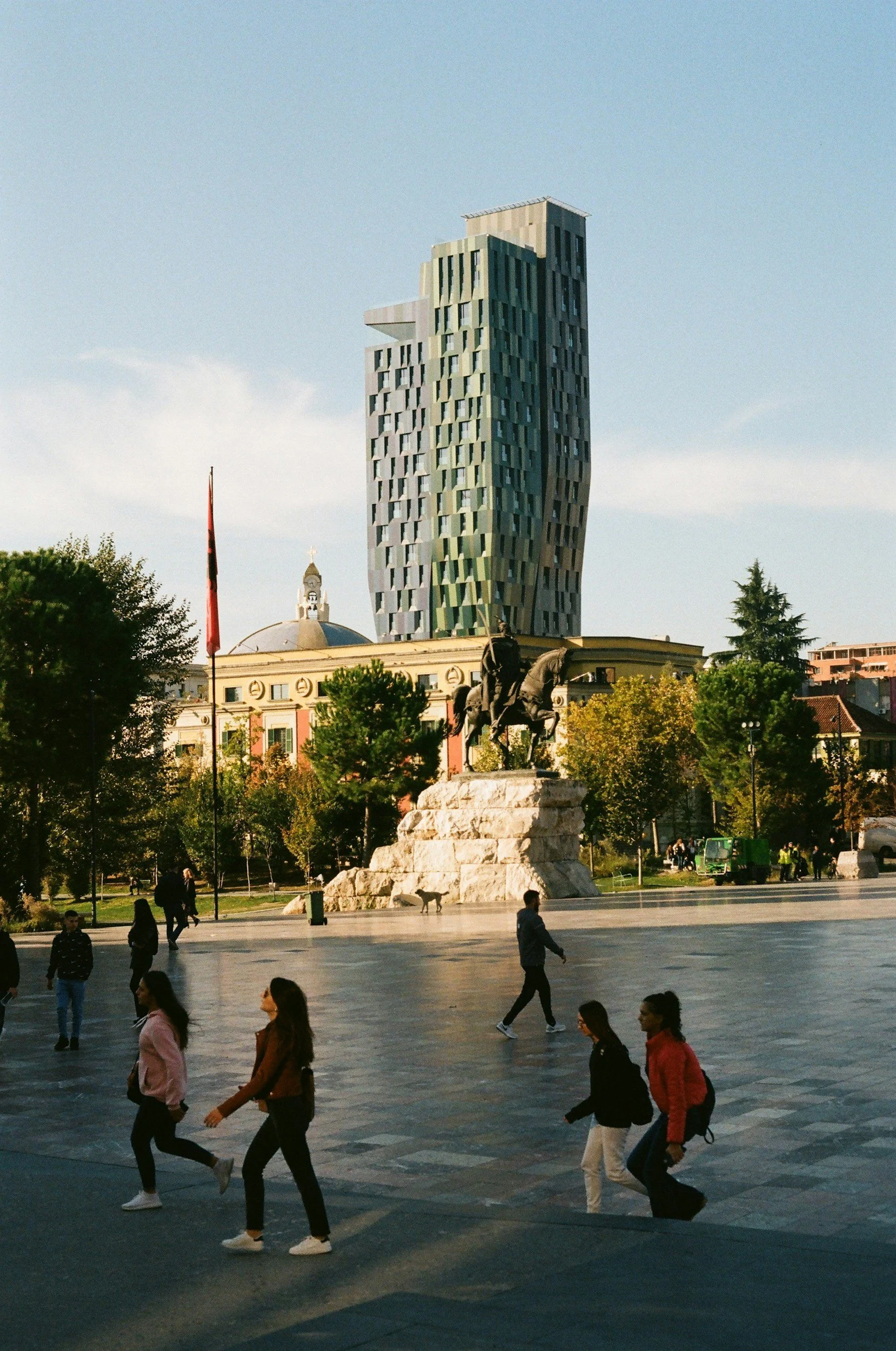
The result is a city of contrasts that still feels in transition. Skanderbeg Square is one of the largest pedestrianised spaces in Europe. The Pyramid, originally built as a shrine to Enver Hoxha, is now climbable on the outside and full of free coding and tech-skills hubs on the inside. The bunker is a museum. The closed-off elite residential quarter, Blloku, is the city's nightlife district. The mountains rise directly out of the streets and you can be over a thousand metres above the city fifteen minutes after stepping into a cable car.
Most people we told we were going to Albania asked where in Albania. After a week in Tirana we understand why so few people have been, and we cannot quite work out why we were among them.
The Communist Story
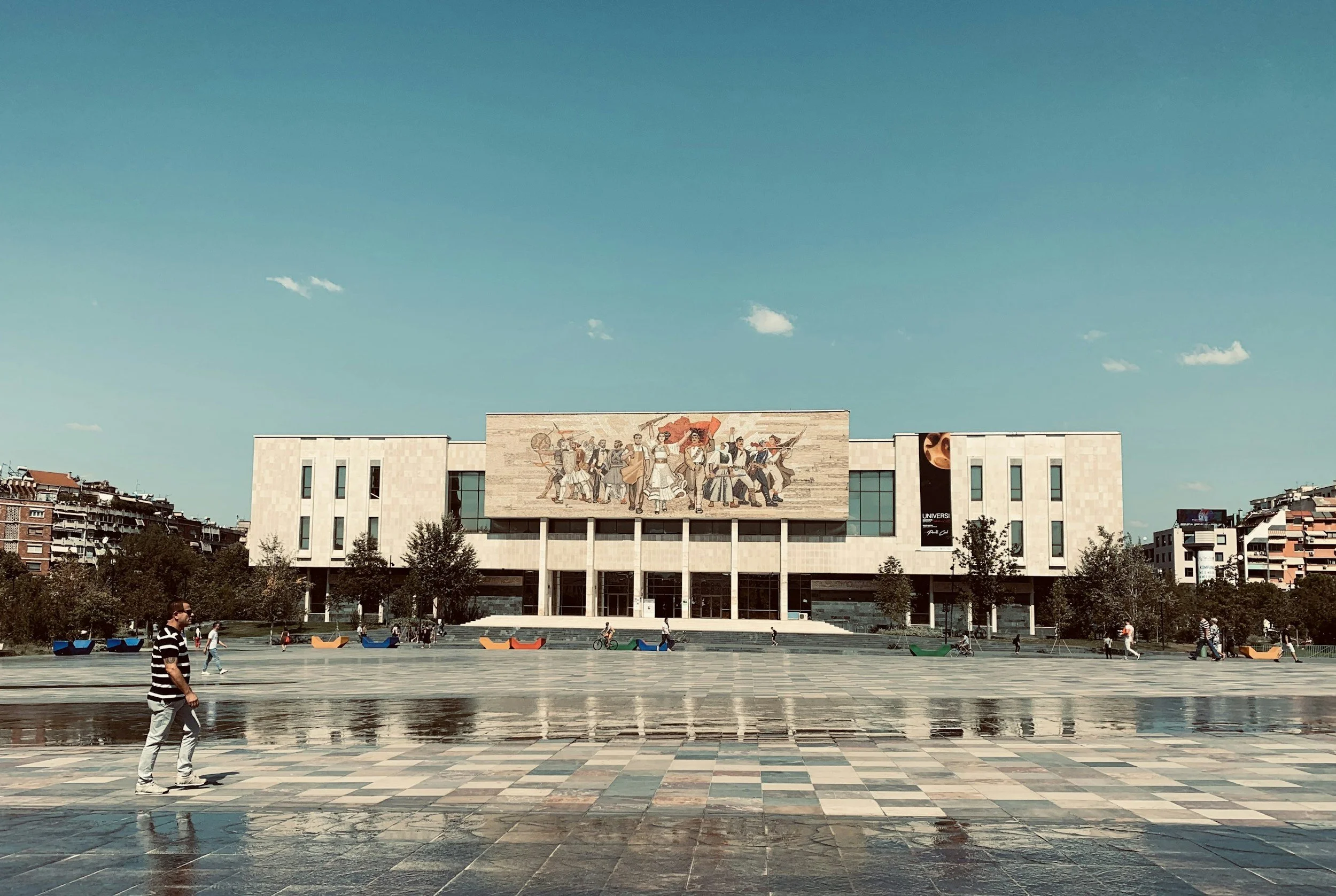
In 1944, the Communist Party of Labour took power in Albania under Enver Hoxha. He stayed in power for forty years and turned the country into the most isolated nation in Europe. Foreign travel was banned. Religion was banned: Hoxha declared Albania the world's first atheist state, demolished a cathedral and a bazaar in central Tirana, and left only one mosque standing because he considered it too beautiful to destroy.
He also built bunkers. More than 170,000 of them, scattered across the country, an average of nearly six for every square kilometre. They are still everywhere, in fields, on beaches, beside roads. Most are small and useless. One, in the hills above Tirana, is enormous: five storeys deep, 106 rooms, built in absolute secrecy as a personal shelter for Hoxha and his generals in the event of nuclear war. The Albanian public did not know it existed.
Hoxha died in 1985. Six years later, in 1991, students in Skanderbeg Square pulled down his statue. The country opened. The bunker became a museum. The pyramid his daughter had designed as his shrine became a public space the public could walk all over. None of this is subtle. The point is that none of it is meant to be.
The Pyramid
Built in 1988, designed by Hoxha's daughter, intended as a museum to his legacy. It cost around $4 million in a country that was at the time one of the poorest in Europe. After communism fell it was variously a NATO base, a nightclub, a TV station and a near-ruin. In 2023 it reopened, redesigned by Dutch architects MVRDV, with external staircases that let the public climb up all four sloping faces.
The climb is short but properly steep. There is a lift if you would rather not. Inside, the small box-like structures dotted around the base look temporary and are not: they are working coffee shops and free coding and tech-skills hubs for young Albanians. The whole building has been deliberately turned from a personality cult monument into a piece of useful public space.
The view from the top is a working view of a working capital, not a postcard. That is the point.
Bunk'art And Mount Dajti
The two things we would not skip in Tirana, in this order.
Bunk'Art 1 sits at the base of Mount Dajti, about twenty minutes from the centre. It is the bunker Hoxha built for himself: 106 windowless rooms, five storeys underground, designed to keep him and his generals alive through a nuclear strike. Walking through it is uncomfortable. It is meant to be. The exhibits do not soften the regime. By the time you climb back out into daylight you will understand more about modern Albania than any guidebook will tell you.
Directly outside the bunker exit is the bottom station of the Dajti Ekspres cable car, the longest in the Balkans. The ride takes fifteen minutes and lifts you high over 23,000 hectares of national park, technically home to bears and wolves. We saw neither. At the top there is a 24-room hotel, a restaurant, sweeping views back across the city to the coastal plain, and inexplicably, a mini golf course. €15 each.
If you have one day in Tirana, do these two together. The bunker first, then the cable car. The contrast is the city in miniature.
Frequently Asked Questions
Is Tirana worth visiting? Yes, without hesitation. The architecture, the history, the food prices, the bar culture and the genuinely warm reception from locals all make it one of the most surprising weeks we have had in Europe. We will be back.
How long do you need in Tirana? Three full days is the minimum. One for central Tirana on foot (Skanderbeg Square, the Pyramid, the castle bazaar), one for Bunk'Art and Mount Dajti, and one for Blloku and the food. A week is not too long. We did a week and never ran out of things to do.
Is Tirana in the Schengen zone? No. Albania is not in the Schengen Area, which means a stay in Tirana does not count toward your 90-day Schengen allowance. This makes it useful as a reset stop on a longer European trip. We arrived from Italy with five Schengen days left and breathed out for the first time in months.
When is the best time to visit Tirana? Late spring (April to June) and early autumn (September to October) are the comfortable windows. Summer is hot and Tirana sits in a basin so the heat collects. Winter is mild compared to most of northern Europe; some rooftop bars close but the city does not really shut down.
Is Tirana safe? Yes. We walked everywhere at all hours, including Blloku at night, and never felt anything other than welcome. Over the course of a week we did not have a single negative interaction. The local buses do get very crowded; we'd recommend using the Clust taxi app for longer journeys.
Do I need a car in Tirana? No. The city centre is walkable. For longer trips inside the city use Clust, the local taxi app: cash on arrival, around 1,000 lek (£10) for a 25-minute ride.
What should I eat in Tirana? Byrek. A flaky pastry stuffed with cheese, spinach, pumpkin, or tomato and onion, sold for around 150 lek (€1.50) by small bakeries everywhere. The cheese version is the safest first try; the spinach is the best.
Do I need cash in Tirana? Yes. Plenty of places do not take cards, particularly the bakeries and smaller bars. Some Albanian ATMs charge a flat fee of around £7 per transaction regardless of amount, so withdraw a sensible chunk in one go.
Key Facts
Currency: Albanian lek. Rough conversion: take two zeros off the lek figure for euros.
Language: Albanian. English is widely spoken.
Schengen: No. Albania is not in the Schengen zone.
Cable car (Dajti Ekspres): €15 per person.
Half-litre of beer in Blloku: €3 to €5.
Byrek: around €1.50.
Taxi app: Clust (cash payment).
Bus app: Transit (40 lek per ride).
Nearest airport: Tirana International (TIA), 17 km from the city centre.
Watch Our Film
Download The Honest Brits Guide to Tirana
We have put together a full guide covering the bunker and cable car in detail, the bars and restaurants we kept going back to, where we stayed, how we actually got there from the ferry port, what we would do differently and what nobody tells you before you go. Drop your email below and we will send it straight to you.