Shkoder, Albania: The Honest Brits Guide
by The Floating Nomads
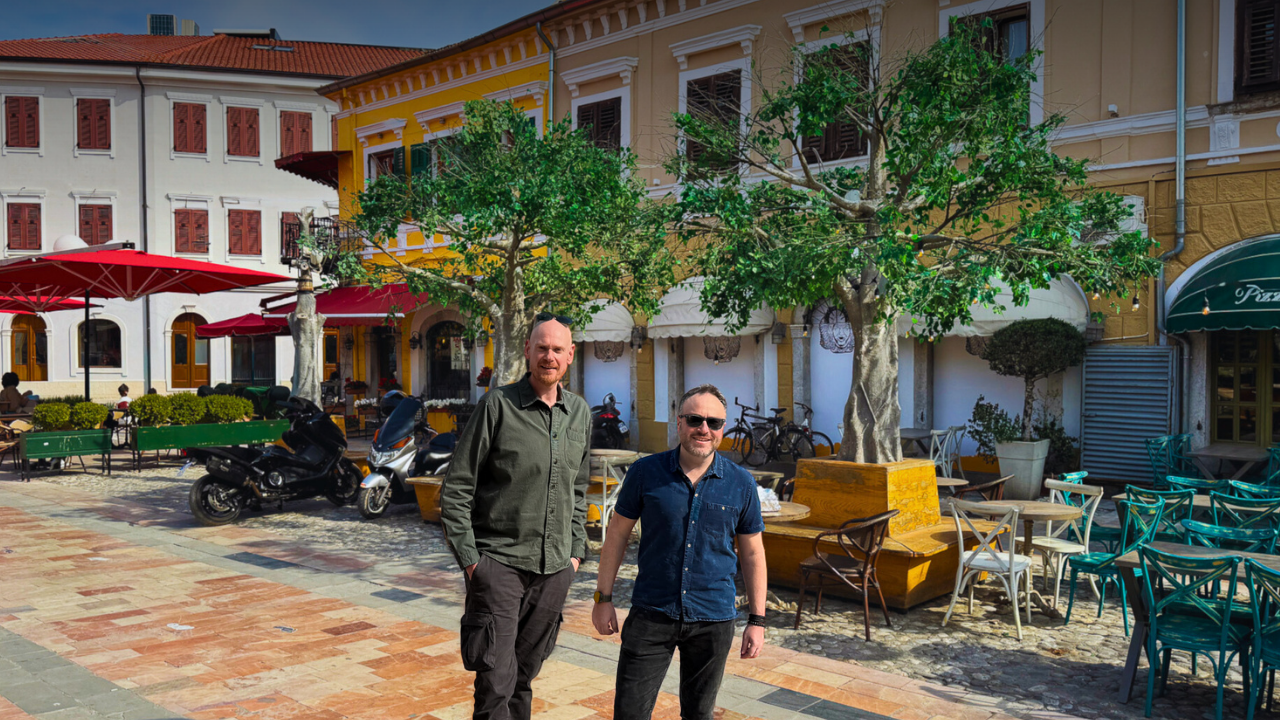
One man trained in Venice and came home to build a little Venice in Albania. Today Shkodër has the pastel streets, the cafe culture and the three-euro spritz to prove it, plus one of the darkest communist histories in Europe a few steps away.
Shkodër is the cultural capital of northern Albania. It is not on most British travellers' shortlist, which is exactly why it should be. If you are planning a trip to Shkodër and want to know what it is actually like to visit, what to do, what to eat and drink, how cheap it really is, why people call it the Little Venice of the Balkans, and how to reach the largest lake in Southern Europe from the centre of town, this is the guide we wish we had before we went.
We came to Shkodër almost by accident, booking it as a midpoint between Tirana and Montenegro without knowing much about it. It turned out to be one of the most surprising places we have been anywhere in the Balkans.
A note on the name: you will see this written as both Shkodër and Shkodra. Shkodër is the standard form, and the one you will find on maps and search engines. Shkodra is how locals pronounce it. We use Shkodër throughout for consistency, but you will hear Shkodra everywhere you go.
What to Expect
Shkodër does not feel quite like anywhere else. The centre does not feel especially Albanian, or Italian, but somewhere in between. People greet each other with “ciao”. There is a genuine cafe culture built around one extraordinary street. And then, a few minutes' walk away, the tone changes completely, into museums that document execution, imprisonment and a century of surveillance, told with a directness that stays with you.
It is also remarkably cheap, remarkably friendly, and still largely undiscovered. We paid around fifty pounds a night for a suite, three euros for a spritz, and under fifteen euros for a full dinner for two with wine. Every interaction we had was warm. If you are thinking of going, our honest advice is to go soon.
The Little Venice Of The Balkans
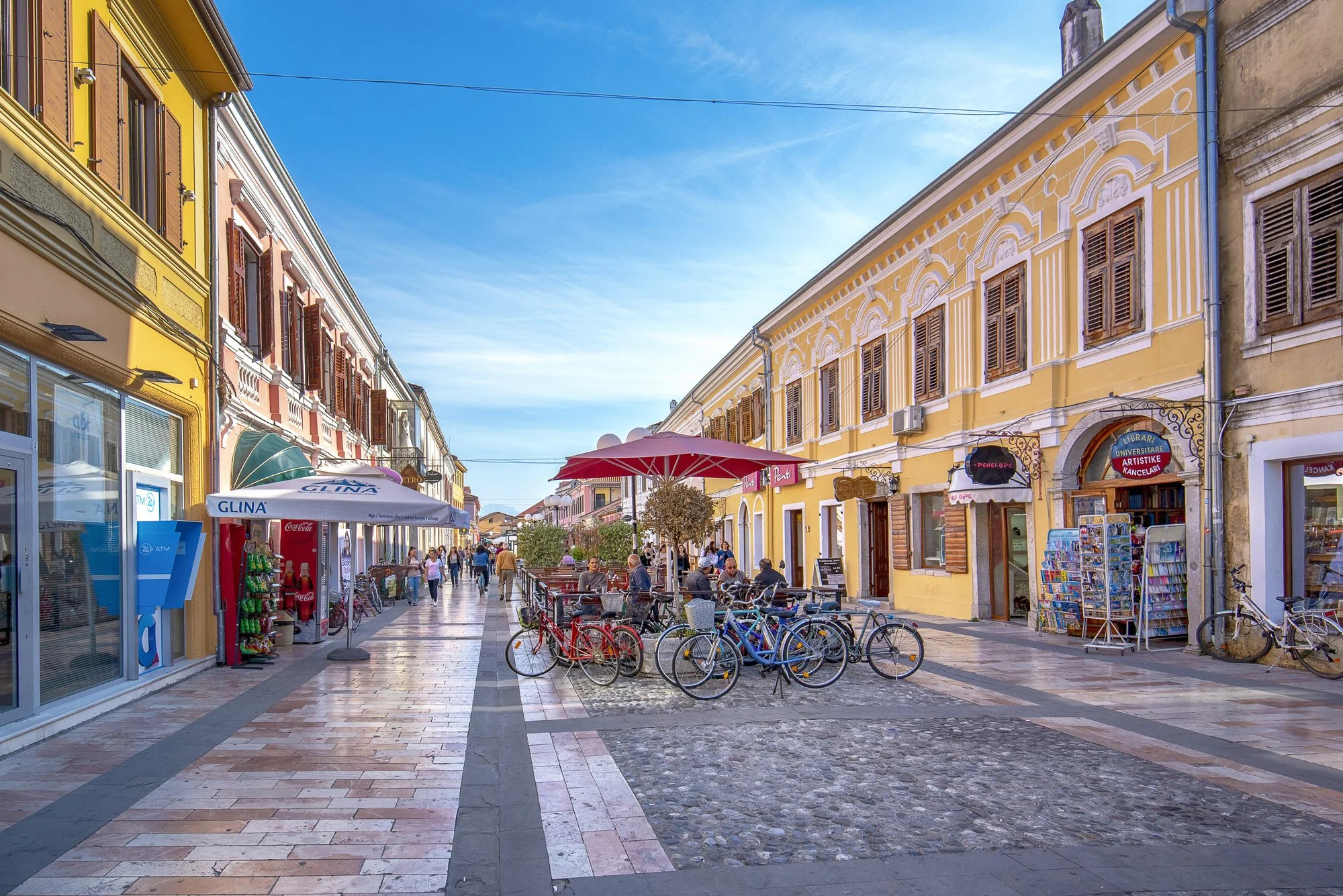
The heart of Shkodër is Rruga Kolë Idromeno, a pedestrianised street of pastel buildings, symmetrical windows and cafe terraces. Close your eyes and land here and you could believe you were in northern Italy. That is not an accident.
The street is named after Kolë Idromeno, the Shkodër-born polymath who designed it. He trained as an artist in Venice and Italy in the nineteenth century and came home wanting to build his own small piece of Venice in Albania. While much of the surrounding Balkans was still under Ottoman rule, he brought back the pastel colours, the symmetrical façades and, crucially, the cafe culture. He did not just design a street. He designed a way of life that the city still lives by today.
The Venetian thread runs deeper than the architecture. In the 1400s this was a Venetian stronghold called Scutari, one of the most important trading hubs on the Adriatic. Ancient Venetian history and nineteenth-century Venetian design, layered on top of each other, are what give central Shkodër its particular feel.
The Dark History Most Visitors Never See
A few minutes from the cafe terraces, Shkodër tells a very different story.
The Marubi National Photography Museum holds the visual memory of Albania. Across three generations, the Marubi family photographed the city and the country, and the collection is extraordinary. As you move through it, the tone shifts. The grand early eras give way to 1944 and the arrival of the communist regime, and the photographs turn to the reality of the dictatorship.
Nearby, the Site of Witness and Memory occupies a building that was a Catholic religious college before the regime confiscated it and turned it into a pre-trial detention and interrogation centre. Hundreds of faces line the walls, people who were imprisoned, tortured and executed. The most haunting are 25 blank rectangles, one for each victim who has never been identified. Each blank is filled only with the word “I”, translated into a different language. The cells where people were held and tortured are something that we’ll never
It is sobering, and it is the context the rest of the city makes more sense against. Shkodër was a centre of resistance. In January 1945 the nearby Koplik Uprising, led by Llesh Marashi, became one of the earliest armed revolts against communist rule anywhere in Eastern Europe. It failed. Marashi was captured, paraded through the streets and executed.
A City Where Faiths Live Side By Side
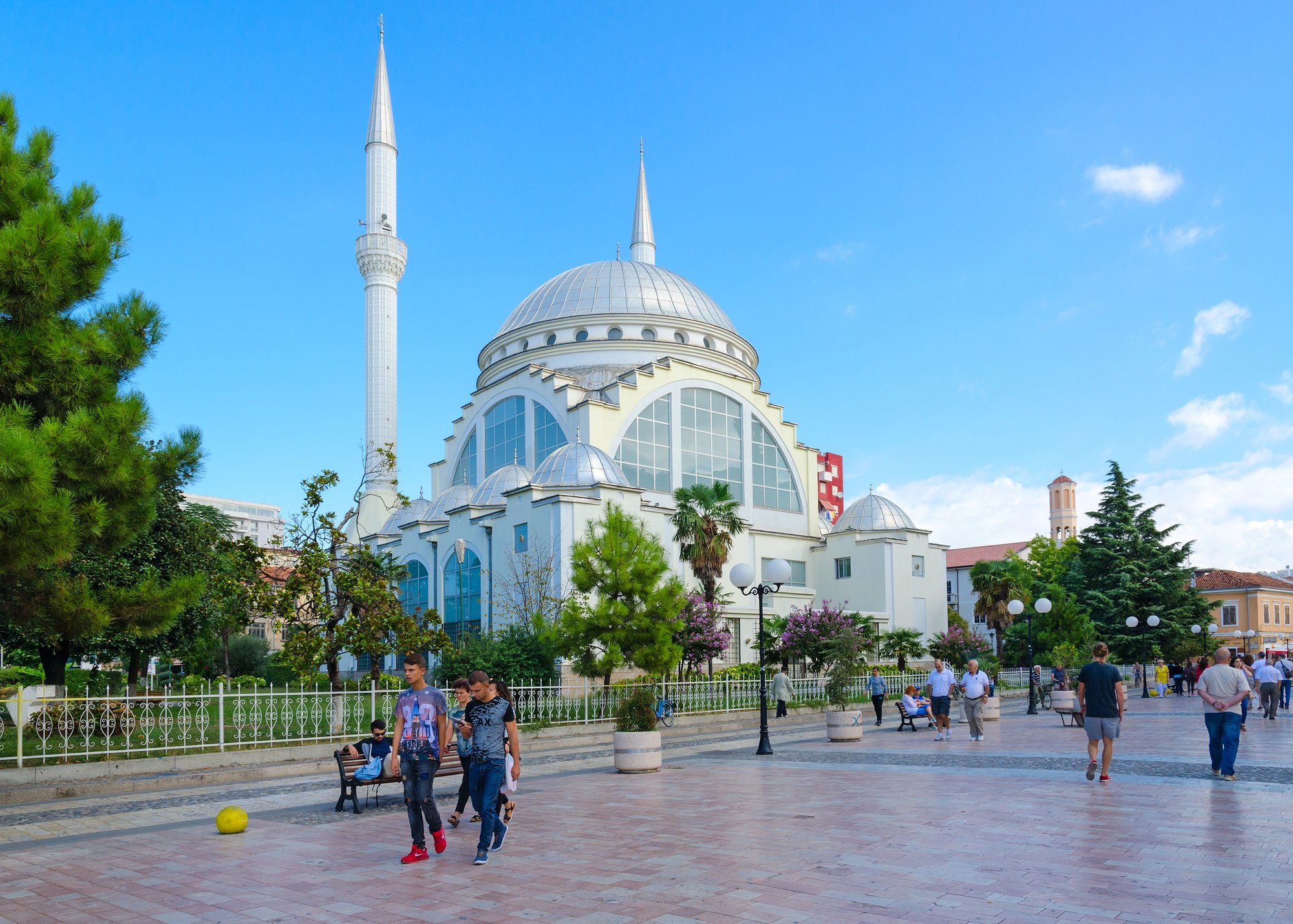
One of the things we found most striking about Shkodër is how its religions coexist. A large mosque, a Catholic cathedral and an Orthodox cathedral all sit within a short walk of each other. Under communism, religion was banned and these buildings were closed, repurposed or destroyed; the Catholic cathedral was turned into a sports hall. After 1991 the communities helped rebuild one another's places of worship, and today the different faiths celebrate each other's holidays. It does mean the city is gloriously noisy, with church bells and the call to prayer overlapping. We loved it.
Rozafa Castle
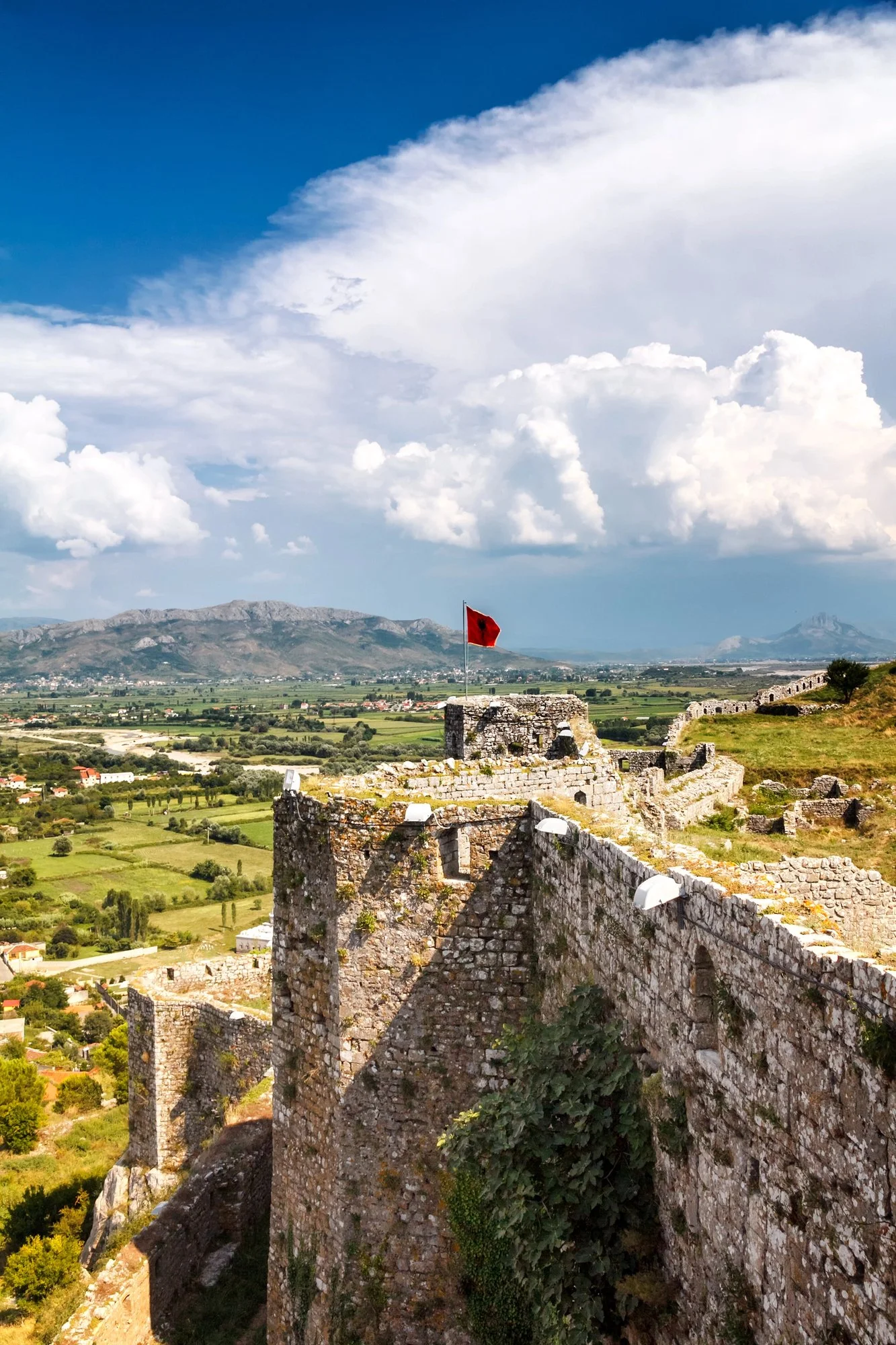
On a hill above the point where three rivers meet stands Rozafa Castle, the most dramatic sight in Shkodër. It is the kind of castle a child would draw: high walls, ruined towers, sweeping views in every direction. The Venetians rebuilt it when they held the city and left their mark, including masonry and the ruins of a Catholic church inside the walls.
It also comes with one of the bleakest legends in the Balkans. Three brothers were building the castle, but every night their work collapsed. A wise man told them the walls would only stand if one of their wives was sacrificed and walled in alive, and they were to say nothing to their wives. Two brothers warned theirs. The third did not, and so his young wife, who had just given birth, was the one chosen. She agreed on one condition: that they leave a hole for her eye, her mouth, her breast and her hand, so she could still see, feed and hold her baby. They walled her in. The castle, the legend says, has stood ever since, haunted by Rozafa.
Lake Shkodra And Shiroka
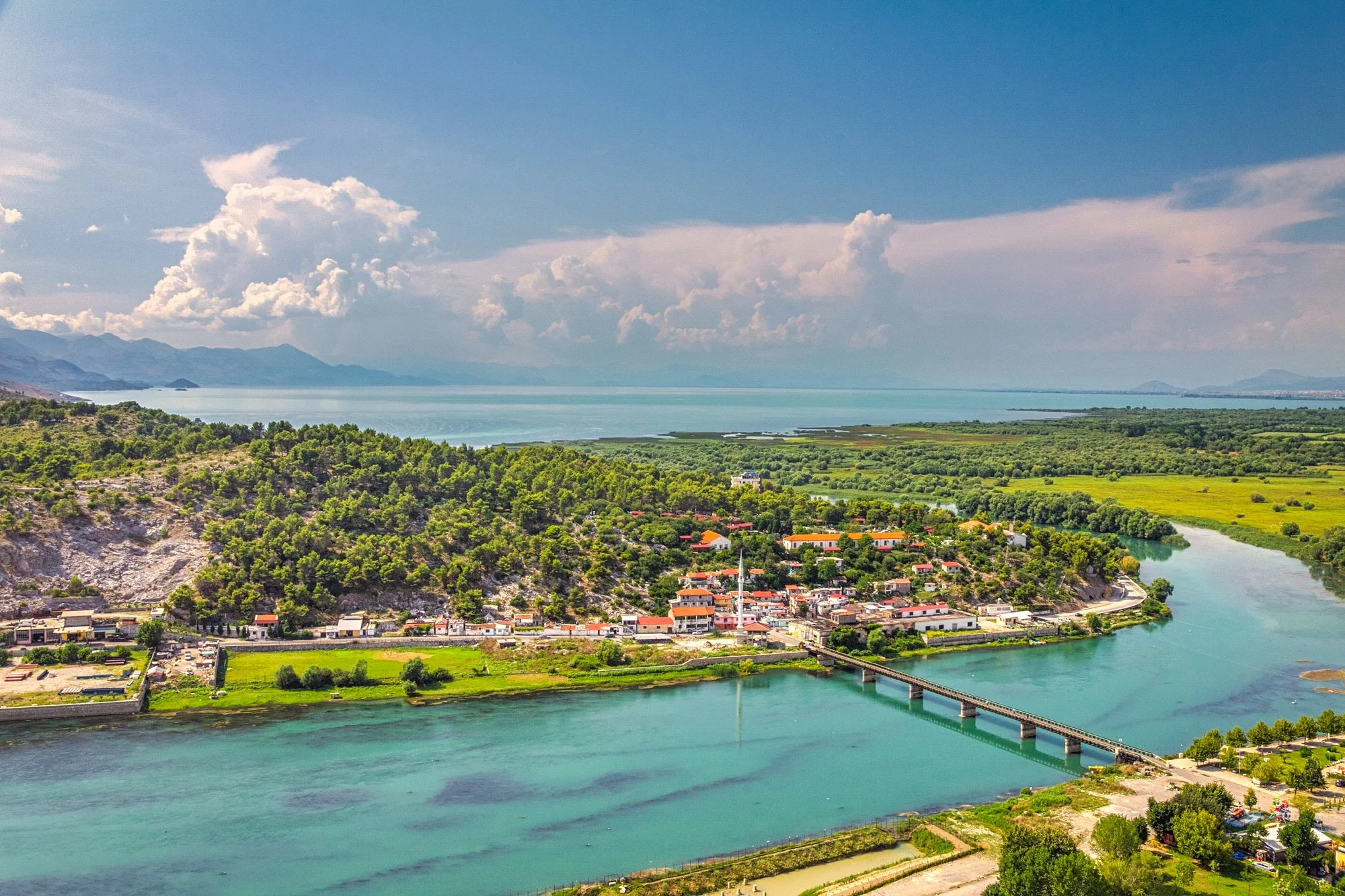
A short taxi ride from the centre brings you to the shore of Lake Shkodra, the largest lake in Southern Europe, shared between Albania and Montenegro. The lakeside town of Shiroka feels like the Italian lakes or somewhere in alpine Switzerland, which is fitting: these are the Albanian Alps, part of the same mountain range that runs through Italy, Austria and Switzerland. The Buna River flows directly out of the lake here. It is one of the most beautiful spots we found in Albania, and the perfect place to end a visit with a drink by the water.
Frequently Asked Questions
Is Shkodër worth visiting?
Yes, and we would say go soon. It is one of the most surprising, affordable and friendly places we have been in the Balkans, and it is still largely undiscovered. The combination of Venetian-style cafe culture, dramatic history and a stunning lake nearby makes it well worth several days.
How do you get to Shkodër?
Shkodër is in northern Albania, roughly between Tirana and the Montenegrin border. It is a common stop between Tirana and Montenegro, and an easy taxi or transfer from either. It sits on the southern shore of Lake Shkodra, which straddles the Albania-Montenegro border. The nearest airport is Tirana International, around 90 minutes by road.
How expensive is Shkodër?
Very cheap by European standards, and noticeably cheaper even than Tirana. We paid around fifty pounds a night for a large suite, a spritz costs three euros, and a full dinner for two with wine came to under fifteen euros. Your money goes a long way here.
Is Shkodër safe?
Yes. We felt completely safe throughout. Every interaction we had was friendly, and Albania in general was one of the most welcoming countries we have visited.
How long do you need in Shkodër?
Two to three days is comfortable. One for the old town, the cafe culture and the museums, one for Rozafa Castle and the lake at Shiroka, and time to spare for simply wandering, which is one of the best things to do here. (We spent just over a week in the city).
How do you pronounce Shkodër?
Roughly “SHKOH-der”. Locals often say “Shkodra”. Both refer to the same city.
Key Facts
Country: Albania (not in the Schengen Area).
Currency: Albanian lek. Cash is essential; many places do not take cards.
Language: Albanian. English is spoken, and “ciao” is widely used for hello and goodbye.
Nearest airport: Tirana International (TIA), around 90 minutes by road.
Don't miss: Rruga Kolë Idromeno, Rozafa Castle, the Site of Witness and Memory, a drink by Lake Shkodra in Shiroka.
Watch Our Film
Download The Honest Brits Guide to Shkodër
We have put together a full guide covering Rozafa Castle and the lake at Shiroka in detail, the bars and restaurants we kept going back to, where we stayed, how to get there from Tirana or across the border from Montenegro, what we would do differently and what nobody tells you before you go. Drop your email below and we will send it straight to you.