Cagliari, Sardinia: The Honest Brits Guide
by The Floating Nomads
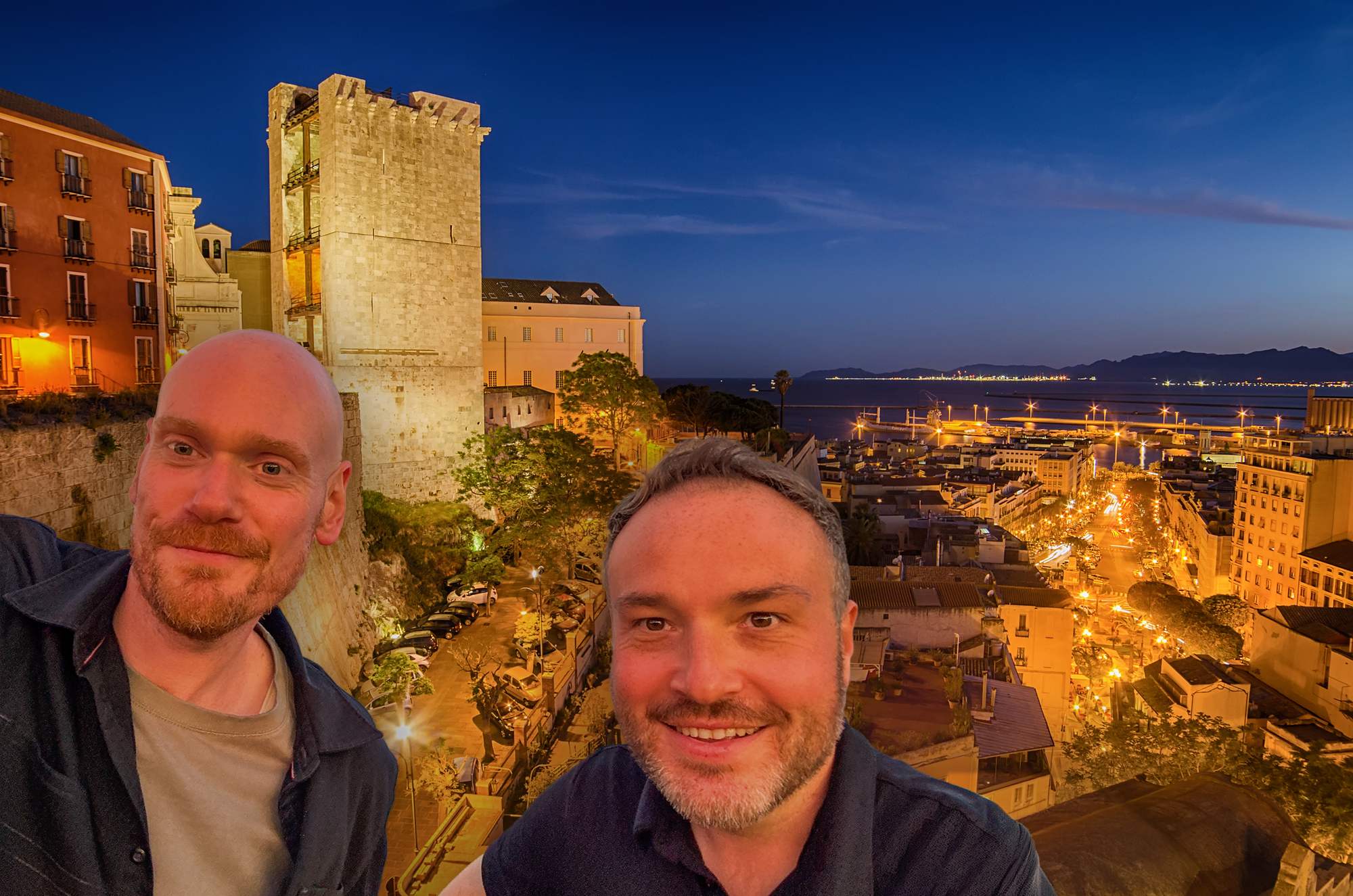
We stayed inside a citadel more than 800 years old, had a Roman amphitheatre carved from the rock almost to ourselves, and watched flamingos a €4.50 taxi ride from the city centre.
Cagliari is the capital of Sardinia, and for most British visitors it is a name on a cruise itinerary. If you are wondering whether Cagliari is worth visiting, what to do in a day or a few days, where to stay and how far your money goes, this is the guide we wish we had before we went.
We had been once before, on a cruise, for about four hours. This time we crossed the island by train from Olbia, took an apartment inside the old citadel and gave the city a proper few days.
What to Expect
Cagliari is a proper city, and after a few days in the north of the island it felt like a different world. It is built on hills, with a walled medieval district on top, the port at the bottom and a lot of steps in between. Most of what is worth seeing is close together, but you will think about every climb.
We kept being reminded of other places. The upper town put us in mind of Lisbon, the palazzi of Genoa, and the marina of Barcelona. It is a city that borrowed from everyone who ruled it, which is probably why it feels familiar even if you have never been.
It is also cheaper than you would expect for a Mediterranean capital. A coffee at the bar was €1.50, the Roman amphitheatre was €3 and the flamingo park was free.
Three Rulers, One Hill
Cagliari's history is easiest to follow by who built what on the hill.
The Pisans came first. In 1216 they built a fortress on the hill that became Castello, and in 1258 they destroyed Santa Igia, the old capital of the Cagliari kingdom, and made the hill their base. The cathedral dates from the same period.
Aragon, and later Spain, took the city in the 1320s and held it, with a short Austrian interlude, until 1720. That is about four hundred years, and it left the towers, the bastions and a great deal of Catalan influence in the palazzi and streets.
In 1720 the island passed to the House of Savoy, who governed it through Piedmontese viceroys. The last big burst of building came at the end of the 19th century, when the city added the Bastione di Saint Remy and the Palazzo Civico.
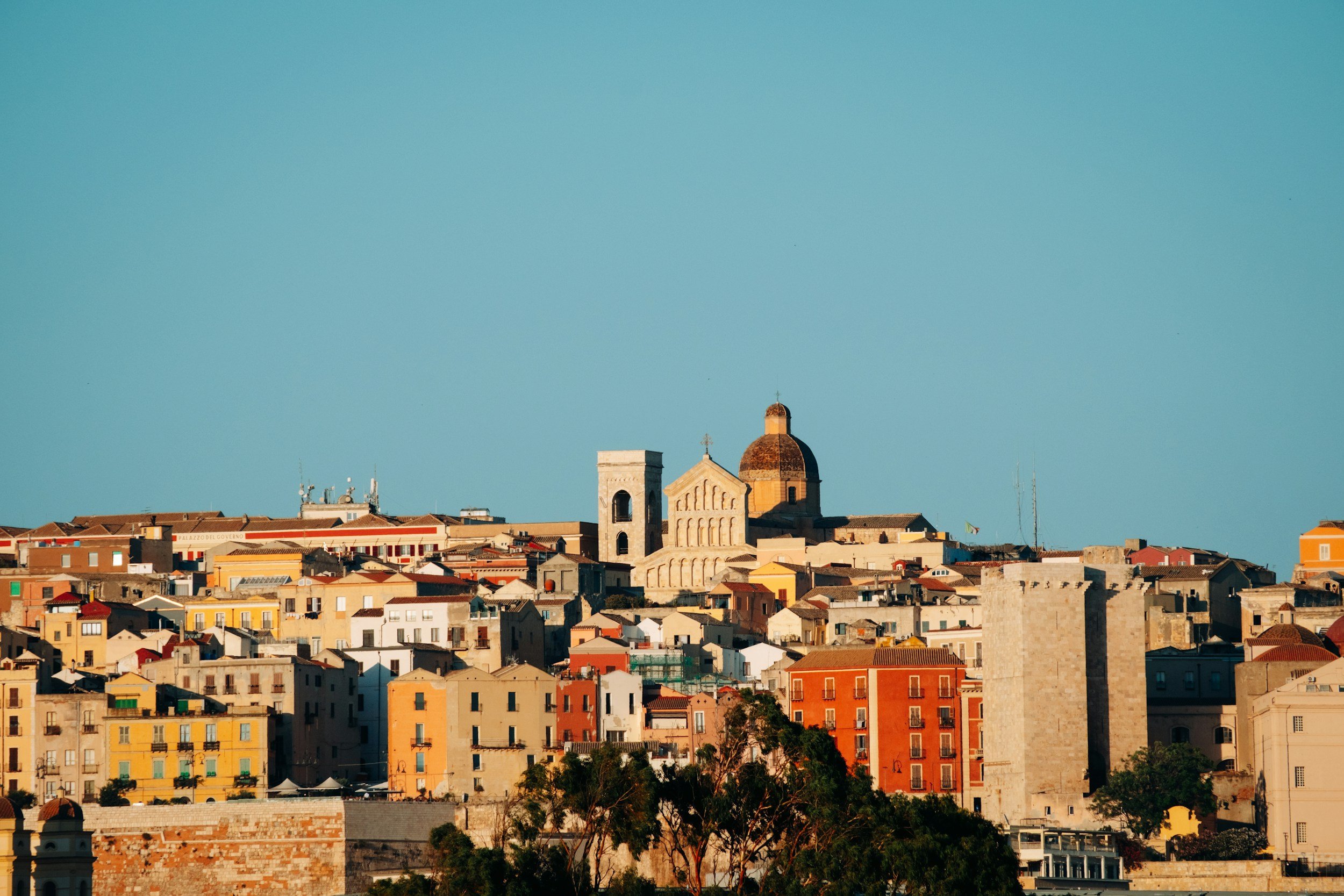
Castello: Sleeping Inside the Citadell
Castello is the walled upper town and it is where we stayed. Our apartment was in a building that had once been part of the castle, with the old roof beams still round like tree trunks. You go in under a heavy gateway with metal spikes, and the streets beyond are narrow and mostly for pedestrians, although a car will occasionally appear round a corner.
It is quiet up here compared with the rest of the city. Once the cruise passengers and day trippers have gone back down the hill, Castello goes very sleepy in the evenings and early mornings.
The cathedral is here too. It was begun by the Pisans in the 13th century, and the front looks like a small version of Pisa Cathedral. That is deliberate, although the facade itself was added in the 1930s.
The price of staying up here is the hill. Every trip to the shops or the bars below is a walk down, and every return is a walk back up. We tried the long flight of steps, a mix of steps and slope, and the winding road. The winding road was easiest, and we later found a lift. On a 26 degree Sunday, carrying the shopping back up, we were glad of it.
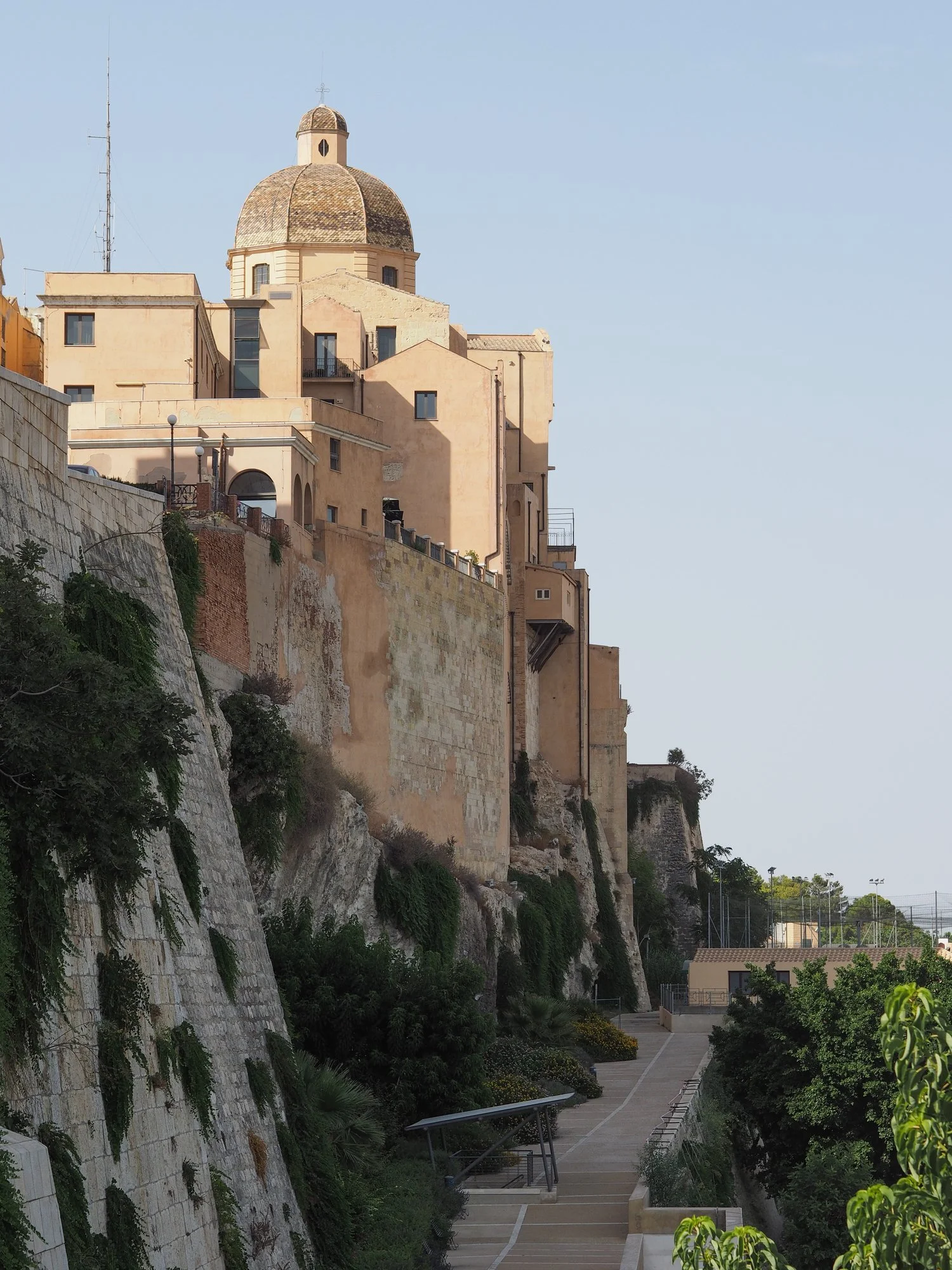
The Bastione and the Steps
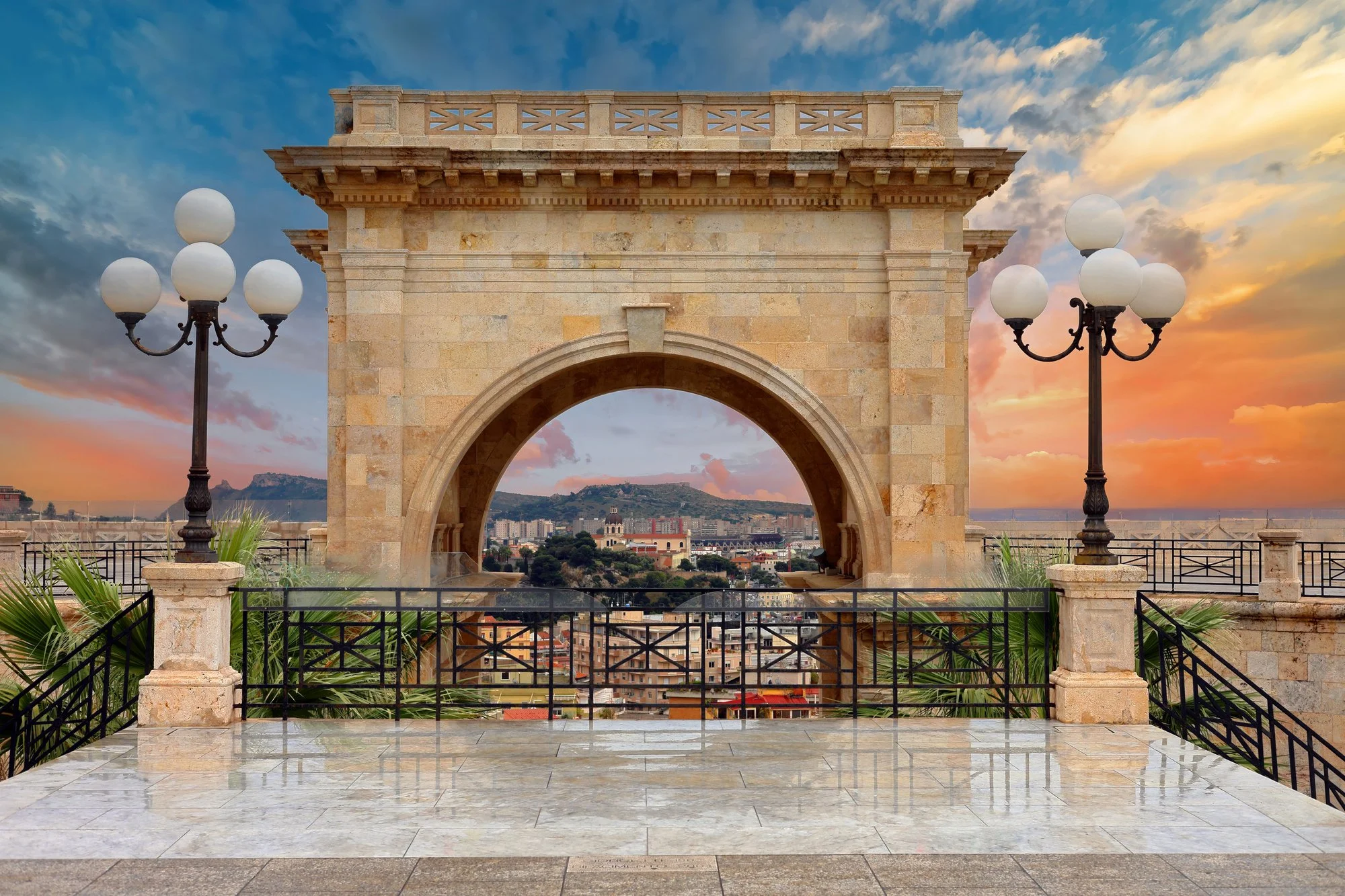
The Bastione di Saint Remy is the big white staircase that links Castello to the lower city. It was built between 1896 and 1902 on top of older Spanish defences, and it finishes at the Umberto I terrace, which looks over the rooftops to the sea. Going down is easy. Coming back up is the price of the view.
At the bottom you are in the marina district, with the sea in front of you, the Palazzo Civico (the town hall, opened in 1907 in a Gothic style that reminded us of Barcelona) and a run of cafés that fill up at aperitivo time.
The Roman Amphitheatre
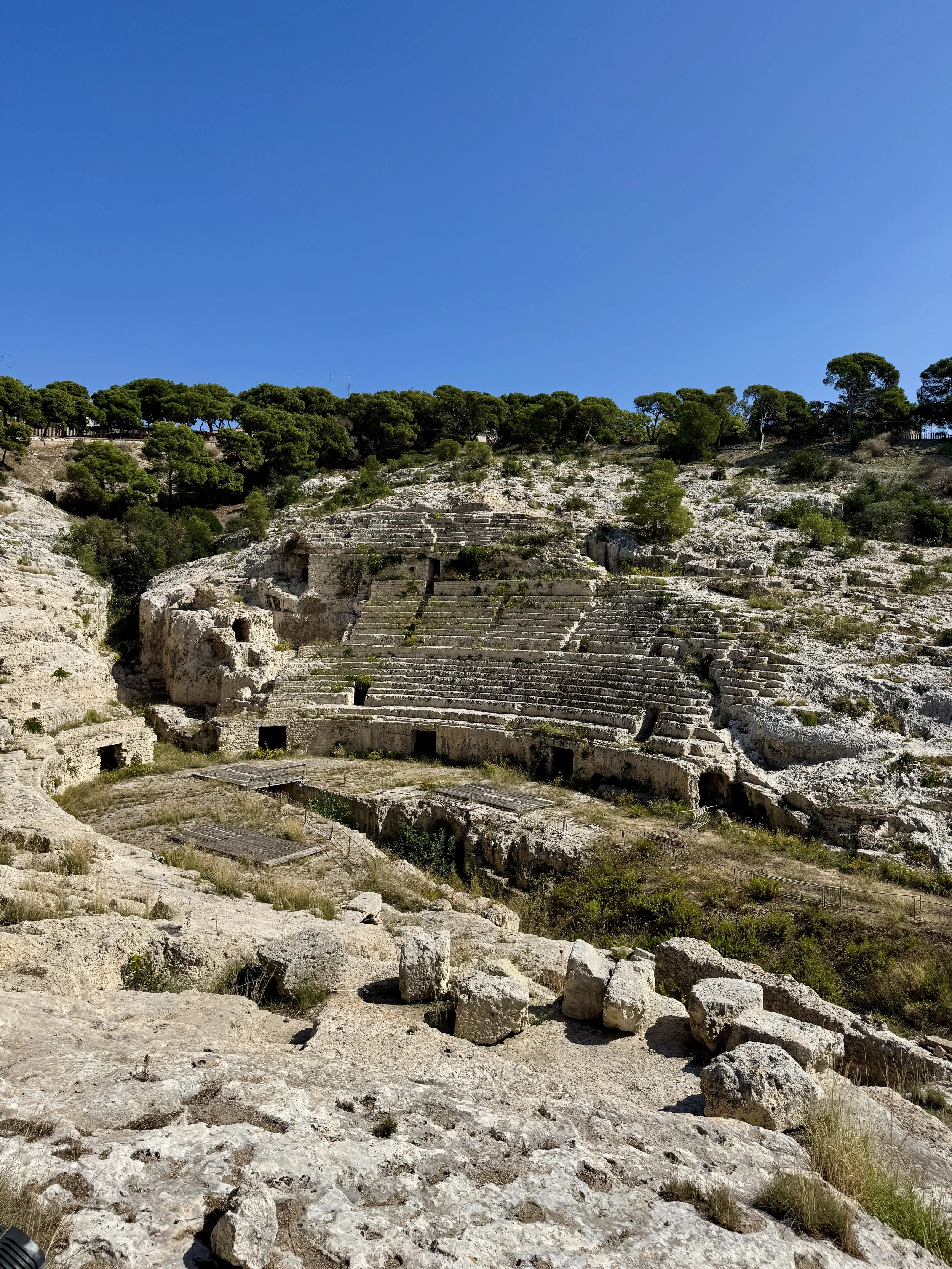
Cagliari's amphitheatre was cut into the limestone hillside in the 1st or 2nd century AD. The city puts its capacity at around 10,000, though other estimates say 8,000. It held gladiator fights, animal hunts and executions, as the Colosseum did, but much of it is carved from the rock rather than built up from stone.
Entry was €3 each. You cannot currently walk into the arena because of restoration work, so you see it from a walkway. There were three other visitors when we went, on a day when a cruise ship was in port. For €3 we thought it was well worth it.
Flamingos at Molentargius
The Molentargius salt pans are a wetland park between the city and the Poetto beach, and they are home to flamingos. Entry is free. It is about a 50 minute walk from the centre, so we took an Uber, which was around €4.50.
The signage is poor. The ticket office and cafe are on one side, and the route to the flamingos is across a road and a canal with nothing to tell you so. We went the wrong way first. We then found our first flamingo asleep on one leg, in a quiet park with hardly anyone else in it and no hills. Numbers change through the year, so treat a sighting as likely rather than guaranteed.
Frequently Asked Questions
Is Cagliari Worth Visiting?
Yes. Four hours from a cruise ship gets you the cathedral and a view. A few days gets you the amphitheatre, the marina, the steps at night and the flamingos, and we left with a list of things we had not done.
How Long Do You Need in Cagliari?
Two full days covers Castello, the lower town, the amphitheatre and the salt pans at an easy pace. We spent a few days and would happily have had more.
Where Should I Stay in Cagliari?
We stayed in Castello, in an Airbnb inside the old walls. It is atmospheric and very quiet at night, but most hotels are in the modern city below. If hills and steps are a problem for you, stay below.
Is Cagliari in the Schengen Zone?
Yes. Sardinia is part of Italy, so time here counts towards your 90 day allowance.
Do I Need a Car in Cagliari?
No. The centre is walkable and Uber works, with short rides costing very little. The salt pans were around €4.50 each way.
What Should I Eat and Drink in Cagliari?
Sardinia runs on the tagliere, a board of cured meats, cheese and bread, and on the spritz, and you will find both almost everywhere. For steak, look for a fiorentina, which was €5.50 per 100g where we went. The place we chose opened for dinner at 7.45pm, so book ahead if you want an early table.
How Do I Get a Coffee Without Paying Tourist Prices?
Have it al banco, standing at the bar. It cost us €1.50 each. Sitting down costs more.
When Is the Best Time to Visit Cagliari?
We were there in early October and it reached 26 degrees, hot enough that the hill walks were work. Summer will be hotter still.
Key Facts
Prices are from our visit in October 2025.
Currency: euro
Language: Italian
Schengen: Yes
Roman amphitheatre: €3 (arena closed to walking at present)
Molentargius salt pans: free
Coffee at the bar: €1.50
Uber to the salt pans: around €4.50
Fiorentina steak: around €5.50 per 100g
Olbia to Cagliari by train: about three and a half hours
Getting around: Bus, Uber, and on foot
Watch Our Film
Download the Honest Brits Guide to Cagliari
We have put together a full guide covering Castello, the Roman amphitheatre and the flamingos at Molentargius in detail, plus our favourite haunts for a proper Sardinian dinner, a tagliere and a well-earned spritz. It also covers where we stayed, how to get there from Olbia by train, what we would do differently and what nobody tells you before you go. Drop your email below and we will send it straight to you.